


Calcium
Calcium
Why is calcium so important to our health?
Calcium deficiency can cause many severe health conditions such as muscle cramps, joint pain or arthritis, tooth decay, and high blood pressure. The main functions of calcium include regulating the heartbeat, blood glucose condensation, neurotransmission, and stimulating the secretions of hormones.
Calcium helps prevent colorectal cancer and lower cholesterol levels. Studies show that the more calcium a young woman consumes, the less likely she will develop kidney stones and osteoporosis later in life.
What is osteoporosis? How does it occur?
Osteoporosis has been dubbed the other “silent killer”. Most people don’t realise that they have osteoporosis until a fracture happens especially in the hip, spine or wrist. Lack of calcium increases the risk of osteoporosis, therefore consume more calcium especially from plant foods as calcium from animal sources such as meat will cause the body to lose even more calcium. The World Health Organization cautions that 20% of hip fractures result in death and 50% permanent disabilities.
How much calcium do we need?
The recommended intake of calcium varies with age (refer to the table below). However, one should not exceed 2,500 mg per day.
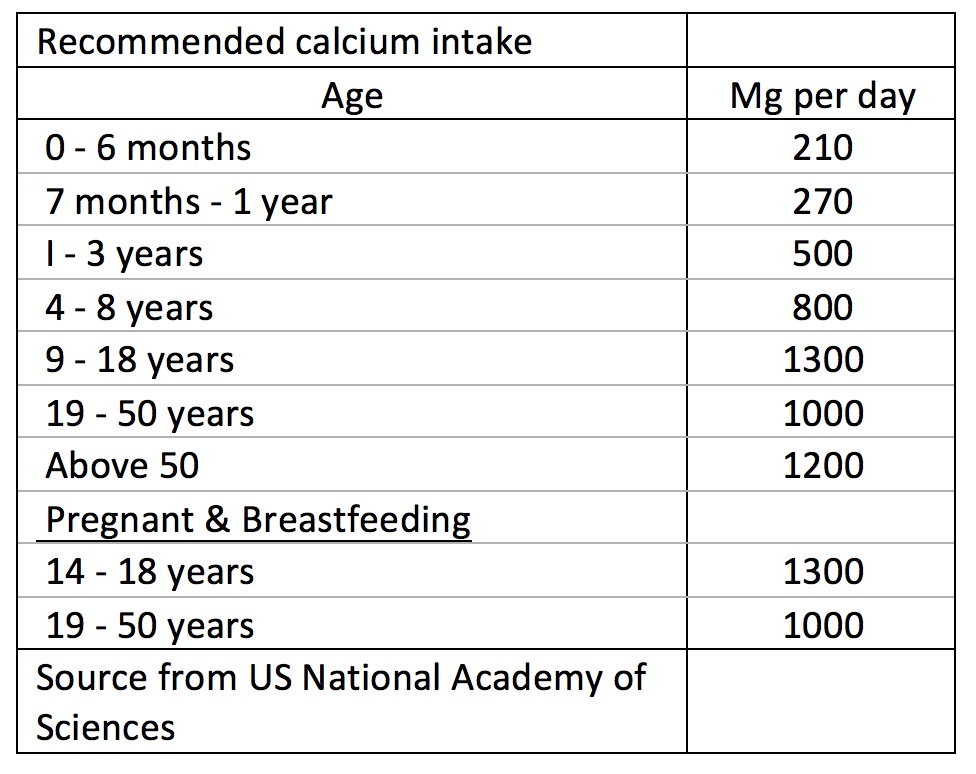
How much calcium do we need? What are the consequences of overdosing on calcium?
Too much of calcium will inhibit the body’s ability to absorb iron and zinc from food. It can also cause constipation, headache, lack of appetite, depression, muscle pain, nausea, vomiting and kidney stones.
How to avoid over consumption calcium?
Soybeans, seaweed, spinach and pearls are best sources of calcium that are easily absorbed by the body. Calcium intake from animal foods or supplement tablets may cause an overdose as compared to calcium from plant foods. Hence, consumption of calcium from natural and wholesome plant foods is the safest and most effective way to maintain healthy bones.